Eric Miles Cheshire Home marks 50 years of care
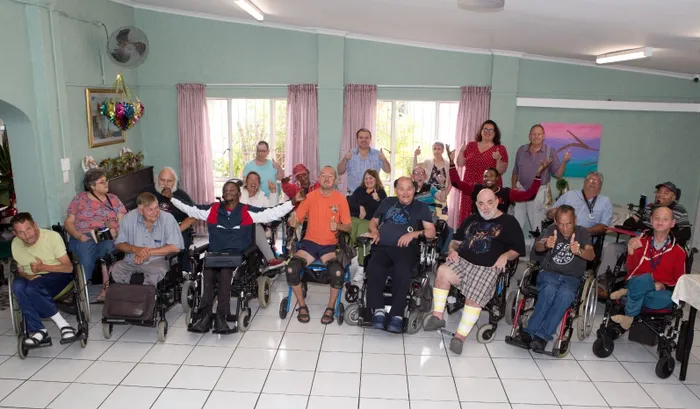
Some of the residents at Eric Miles Cheshire Home in Sanddrift
Image: SAFRA LEVIN
Eric Miles Cheshire Home (EMCH), a residential facility for physically disabled adults, has marked its 50th anniversary with the launch of South Africa’s largest printed QR code, officially launching a year of awareness and fundraising initiatives.
The 100m² QR code was unveiled on Saturday, January 17, drawing attention to the Home’s five decades of providing care, dignity, and stability to adults living with physical disabilities.
Founded on June 12, 1976, EMCH is a registered non-profit organisation and forms part of a national network of 16 Cheshire Homes. The Home, based in Sanddrift, currently supports more than 30 residents, many of whom require lifelong assistance with daily living.

Staff at Eric Miles Cheshire Home in Sanddrift
Image: SAFRA LEVIN
Home Manager Carla Hanekom said residents have a wide range of conditions and support needs. “Our residents range in conditions from blind to cerebral palsy, to paraplegic and quadriplegic. They all require different levels of assistance with daily living activities. Some can brush their own hair, others operate their wheelchairs by using a mouth-held stick to push the buttons. I believe we have enriched the lives of our residents by keeping them as independent as possible for as long as possible while assisting them with dignity and respect,” she said.
Ms Hanekom said that funding models have changed significantly since the Home opened.
“When the Home opened, it was fully funded by the government and donors, and residents did not have to contribute financially at all. Over the years, the grants became less, donations more tricky, and everything more expensive. At the moment, government grants cover 20% of our operational expenses," she said.
To remain sustainable, residents contribute a monthly board and lodging fee, while the Home relies heavily on fundraising initiatives and income generated through its charity shops.
“If we do not charge a fee and do the amount of fundraising we do, the Home would cease to exist, and these residents will not have anyone to care for them, physically and emotionally,” said Ms Hanekom.
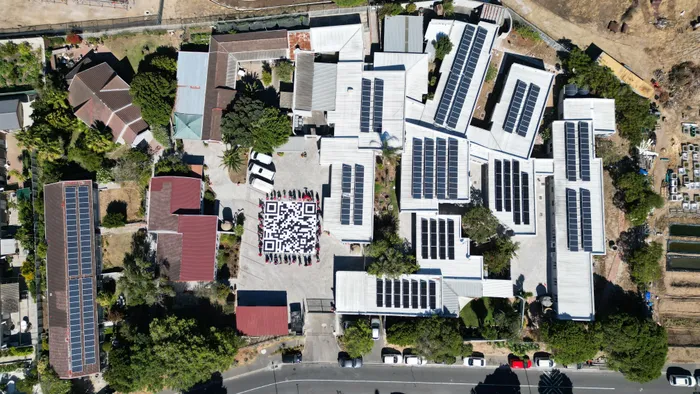
The 100m² QR code was unveiled on Saturday, 17 January, drawing attention to the Home’s five decades of providing care.
Image: SAFRA LEVIN
Operational costs remain high, with salary expenses averaging around R9 500 per resident per month.
Grocery costs fluctuate between R1 500 and R2 000 per resident, excluding utilities, maintenance, and vehicle expenses, she said.
Larger capital needs, such as safety upgrades and essential equipment, are addressed only through dedicated fundraising or major donations, said Ms Hanekom.
The QR code initiative forms part of EMCH’s broader effort to strengthen community awareness and involvement.
“We need the community to know who we are, where we are, and what we do. The QR code is something unique that we could claim and a first for South Africa, and in all probability Africa as a whole. With the publicity this is generating, we can introduce our Home and the service we render to the public and make it personal.”
Further anniversary activities include participation in the Cape Town Cycle Tour, a 1970s-themed birthday celebration in June, and the Home’s annual fundraising fete in October.
Community members are encouraged to engage with EMCH online to learn more and find ways to get involved, or call them at 083 702 3913 or follow them on Facebook