First Braille beach signage launched at Blaauwberg Nature Reserve
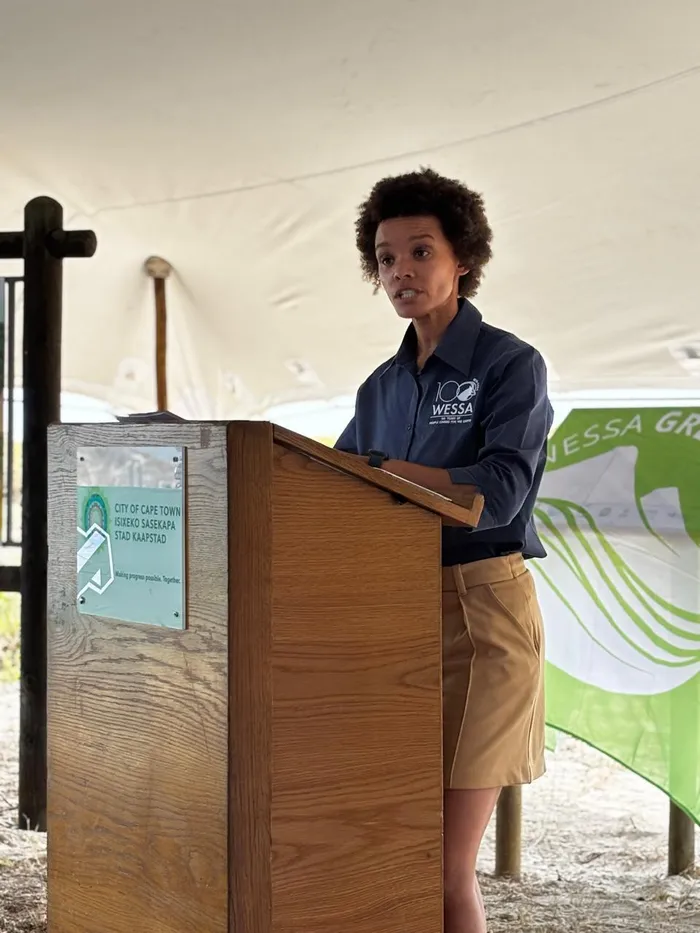
(Wildlife and Environment Society of South Africa (WESSA) CEO Cindy-Lee Cloete shared her speech.
Image: TARA ISAACS
South Africa’s first Braille informational beach signage was unveiled at Eerste Steen in the Blaauwberg Nature Reserve on Wednesday afternoon, marking a milestone for inclusive access to the coastline.
The tactile signage, which includes Braille, raised text, and QR codes linking to audio descriptions, is designed to enable blind and partially sighted visitors to engage independently with information about the beach, its ecosystems, and its heritage.
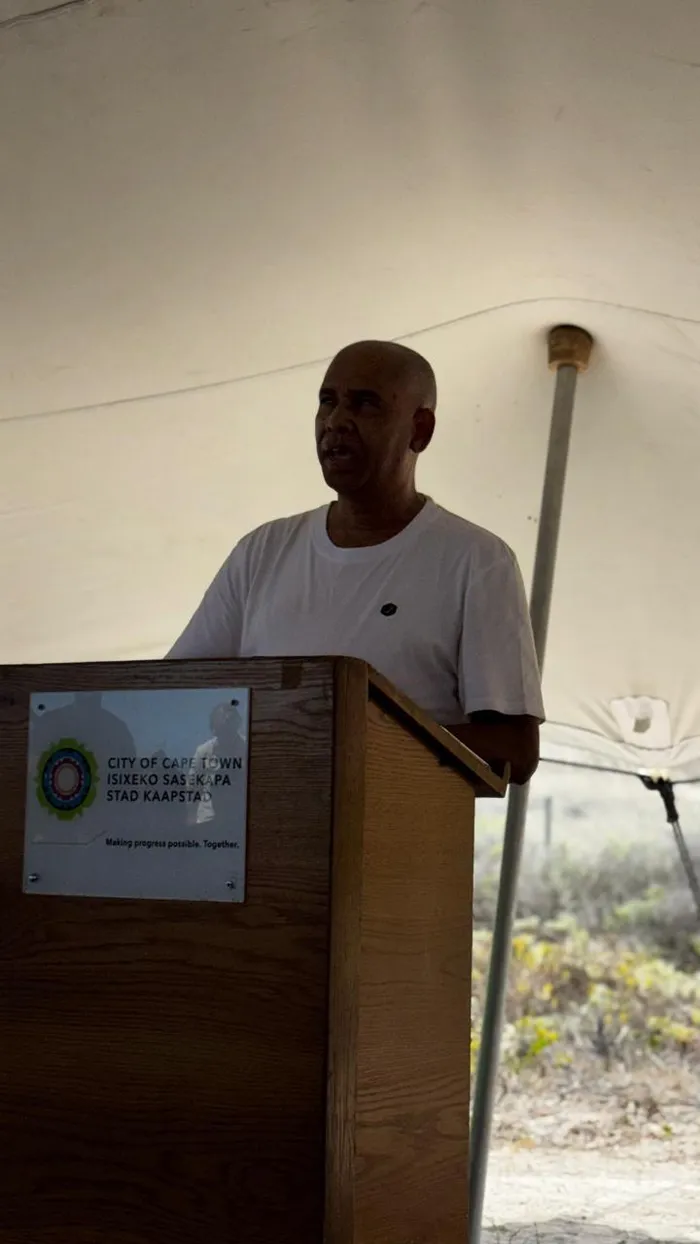
Blind SA representative Abraham Allies welcomed the signage as a step towards independence and dignity.
Image: TARA ISAACS
Deputy Mayor Eddie Andrews said the initiative highlights the need to move beyond assuming access is universal.
He described the project as both practical and profound - practical in providing meaningful access to information, and profound in affirming that beaches and natural spaces belong to everyone.
He said that inclusion should be built into public spaces from the outset, not added as an afterthought.
Wildlife and Environment Society of South Africa (WESSA) CEO Cindy-Lee Cloete said the signage addresses a longstanding gap in environmental education and access.
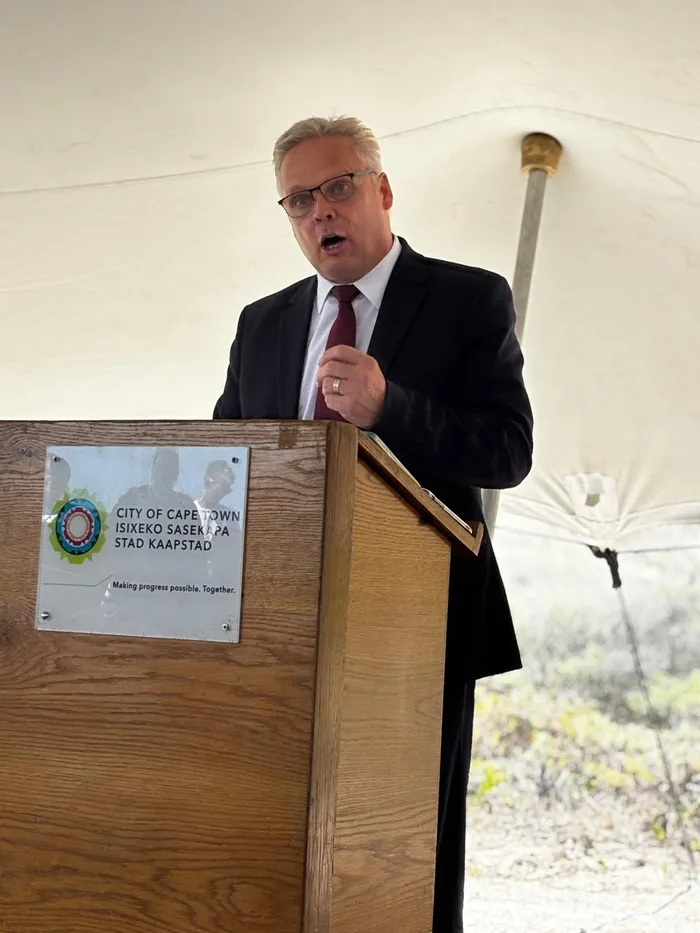
Minister of Forestry, Fisheries and the Environment Willie Aucamp thanked the sponsors for all efforts to bring the Braille signage to life at Blaauwberg Nature Reserve
Image: TARA ISAACS
She said that while beaches are public spaces, meaningful engagement has largely remained out of reach for blind and partially sighted people.
“Blaauwberg Nature Reserve was deliberately chosen as the pilot site, with plans to expand the initiative to other coastal areas.”
The unveiling also forms part of WESSA’s centenary celebrations, as the organisation marks 100 years of environmental work in South Africa.
Ms Cloete said the project reflects both WESSA’s legacy and its future direction - embedding accessibility into environmental programmes and ensuring conservation and inclusion go hand in hand.
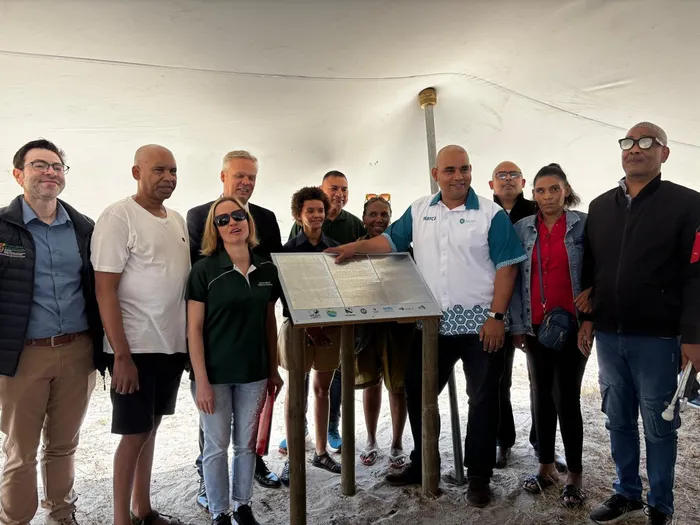
Partners and sponsors of the event at the unveiled Braille signage board.
Image: TARA ISAACS
Blind SA representative Abraham Allies welcomed the signage as a step towards independence and dignity.
He said that for visually impaired visitors, being able to read about the environment through touch means no longer having to rely entirely on others for information.
He said that accessibility benefits everyone and expressed hope that this would be the beginning of wider change.
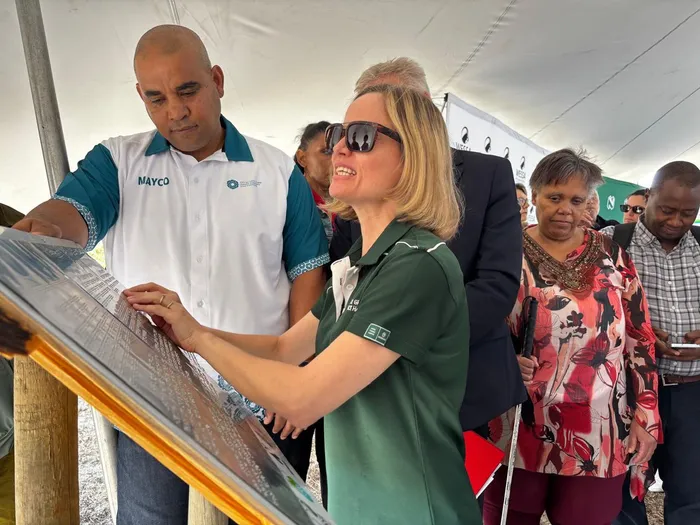
Emotions ran high as Hanlie Stelhi read the Braille signage that had been unveiled
Image: TARA ISAACS
Minister of Forestry, Fisheries and the Environment Willie Aucamp said the department aims to move from a “look and read” approach to one where visitors can “touch, listen, feel and experience”.
He announced plans to revitalise national coastal signage, focusing on technological integration and inclusivity, with the intention of expanding similar features to harbours and coastal sites across the country.
“The unveiling signals a shift towards more inclusive coastal spaces - ensuring that access to South Africa’s natural heritage is a right enjoyed by all,” he said.
Emotions ran high as Hanlie Stelhi read the Braille signage that had been unveiled, describing to a visually impaired visitor what the ocean, its dunes, and the preservation of the dunes mean.
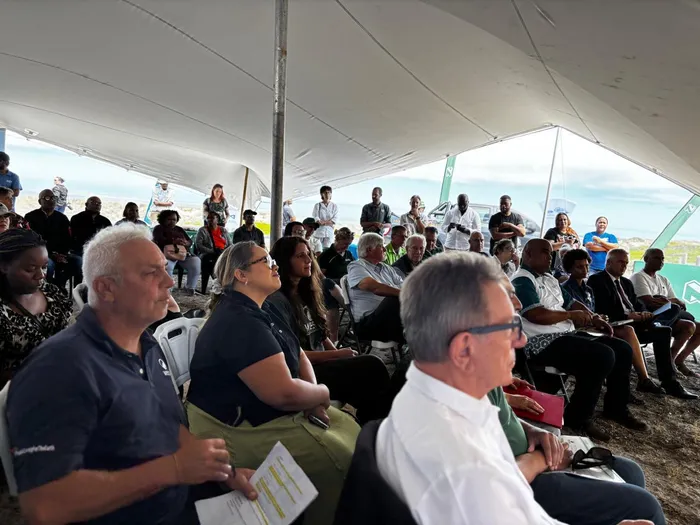
Attendees sat captivated as each speaker presented their input to the Braille signage
Image: TARA ISAACS